

Why we do it
Prevent surgical errors
We are impassioned with preventing recurrent human & system surgical errors — improving American lives & hospital system profitability.
We became passionate. We are now impassioned.
Passion derives from a Latin verb meaning "to undergo": a temporary, intense reaction. Being impassioned is persistent. It turns passion into a driving force that propels action regardless of the hurdles ahead, and keeps refueling it time and again.

Our why
Like so many others, each of Magvation's leaders at some point placed trust in systems of care that failed. Human error was responsible for acutely injuring or taking the lives of our loved ones. These devastating & poignant personal events have impassioned us to reduce preventable surgical errors, and drive our unyielding pursuit of better surgical outcomes for those who count on us most.
Doing good, and doing well. It's about rapidly advancing MedTech so hospitals can deliver surgical care in new ways, with levels of operating room safety like never before, so no other American has to suffer from a preventable surgical error. The only way to keep doing good is to do well financially: for our investors, partners, customers and ourselves.
The problem at hand
Every sharp, counted by hand, at least three times
For any given surgery, each & every sharp must be counted a minimum of three times, to ensure that "No Thing Is Left Behind". In open-heart surgery, 150+ tiny suture needles & other sharps are counted by hand while the patient remains on bypass, and the count must be 100% accurate before the first closing stitch.
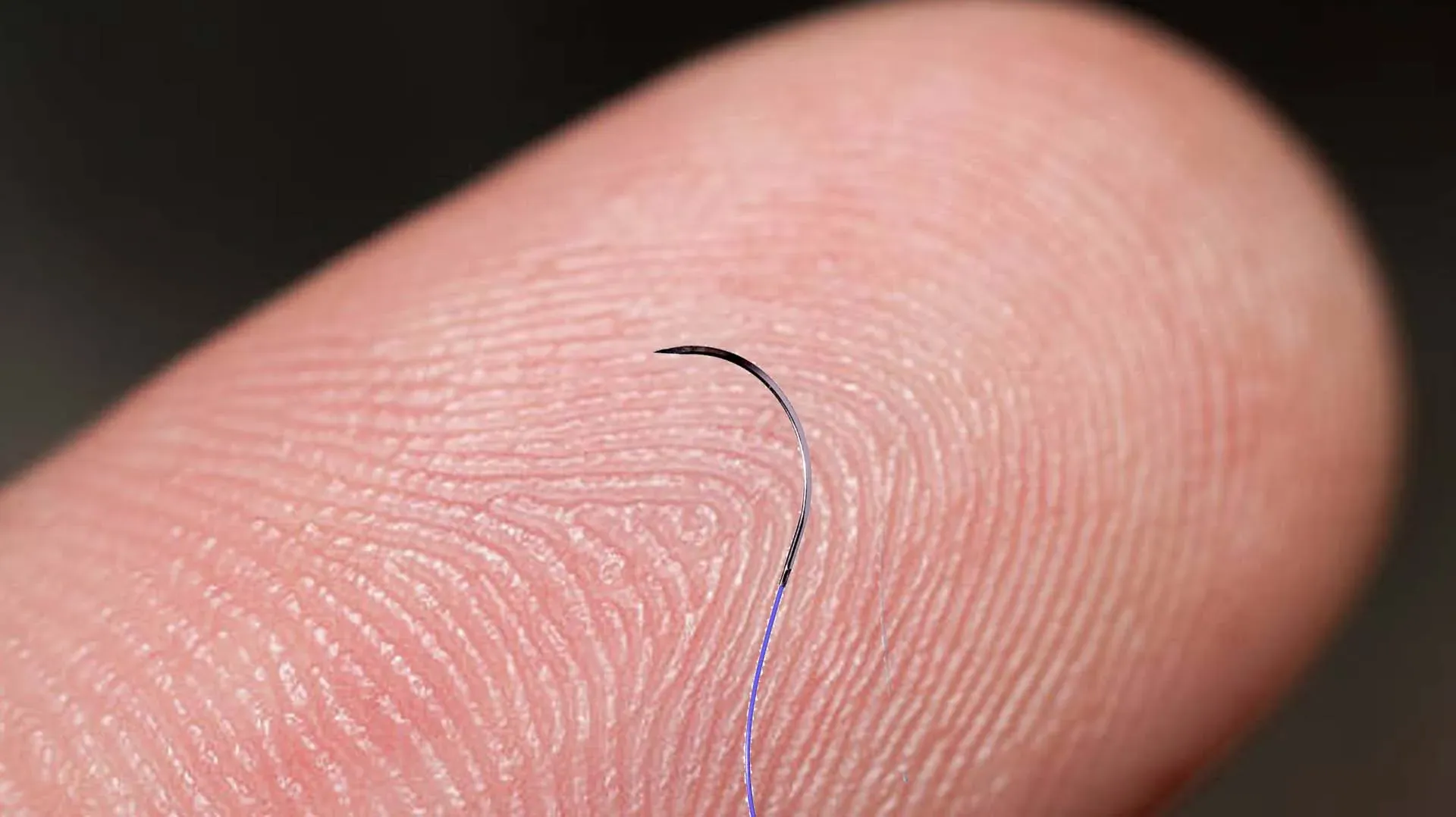
A cumbersome manual process
"The Count" is entirely manual: visually taking inventory, physically counting, audibly tallying, and hand placing & recording every sharp before, during and after surgery.
An error-prone standard of care
Manual counting has been the AORN recommended practice since 2005. It is distracting, inefficient and fraught with counting errors, retained foreign bodies and needle-stick injuries.
Disruption is the #1 cause of surgical errors
The team's focus belongs on the patient
Distractions break attention
From case-irrelevant phone calls to loud music, observational studies find a wide array of distractions associated with incidents in the operating room.
Interruptions break concentration
Running out of sutures, looking for missing needles and shift changes break the natural progression of a task, and can be a causal factor in surgical errors.

Cost of care
Count errors are costly for patients, surgeons and hospitals
- of 382 retained-item events in 191,000 operations were miscounted suture needles
- %
of 382 retained-item events in 191,000 operations were miscounted suture needles
- unreimbursed additional care per patient after a retained item ($70K–$200K)
- $K
unreimbursed additional care per patient after a retained item ($70K–$200K)
- average medicolegal settlement, regardless of patient outcome
- $K
average medicolegal settlement, regardless of patient outcome
- of surgeons report severe emotional distress after an intraoperative adverse event
- %
of surgeons report severe emotional distress after an intraoperative adverse event
Miscounts & retained surgical items nearly double the average cost of hospitalization and can prolong operative time by up to an hour per case. Sources: a large-scale institutional study; the Joint Commission (2019); a cross-sectional survey of surgeons at Boston teaching hospitals.
Be involved
Whether you're a surgeon, nurse, or scrub tech with passion & insight, a hospital administrator with purpose & vision, a potential partner with IP & know-how, an investor with wisdom & capital, or even someone looking for a career & calling — we want to hear from you.